

OOFFEE
SYNOPSIS
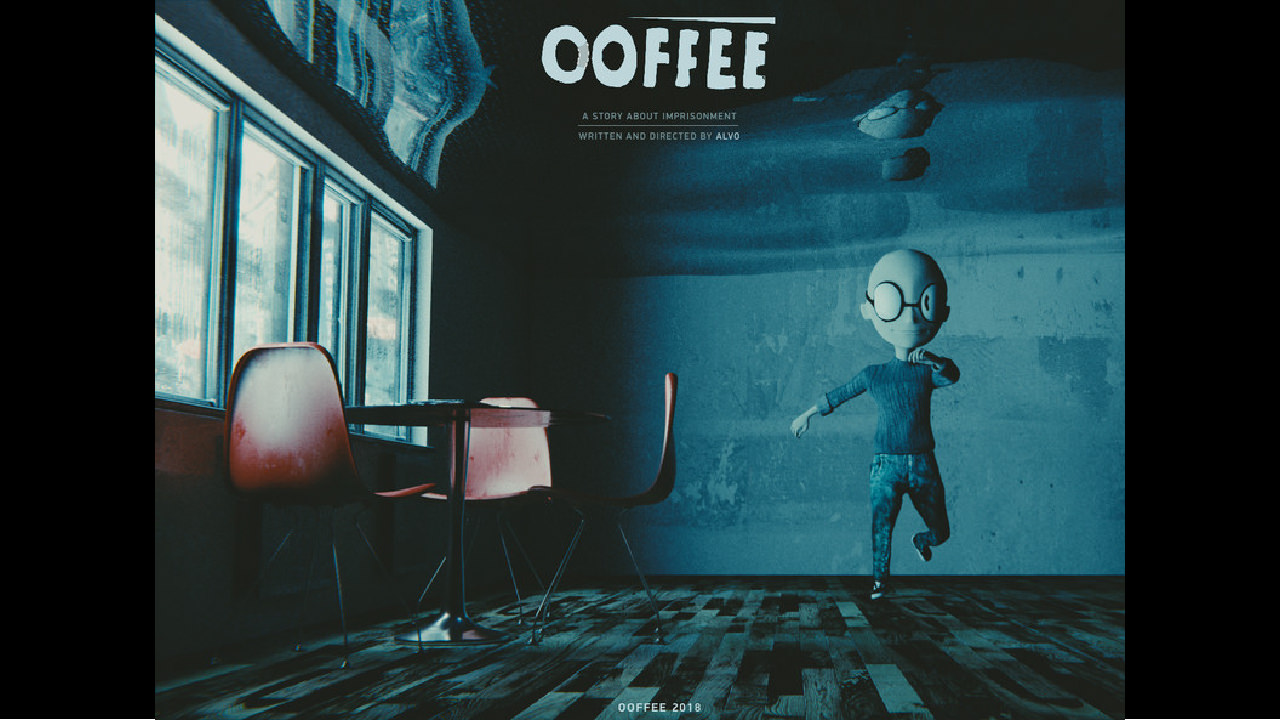
アニメーションは、人々の日常生活に存在する力をフォルムとして示したがる。私たちは経済システムのなかの生産者だが、私たちが生み出す経済的利益とは、時間や金の欠如ゆえに必ずしも自分自身で消費することも楽しむこともできないものでもある。あらゆる人々がいわゆる「制度化」によって苦しむ。不能物であることへの内的な恐れや、他の社会の成員のニーズを満たせなくなることへの恐れがある。鎖を壊そうとすれば、社会的な存在としての私たちの未来が脅かされてしまう。だが、こんな状況は囚人と変わらないのではないか。国のシステムの経済的利益のために働き、抵抗もできず、ただ制度化に苦しむだけだからだ。国家は、教育、兵役、自治、遍在する監視を通じて人間の生活に干渉する。規律に乗らない個人を見つけ出すことによって。差異を作り出すことを欠点とみなすことによって、これらの状況はますます強くなっていく。個人の変化というメカニズムが日常的に慣れ親しんだものとして浸透していたとすれば、国家による投獄化など受け入れられたはずがない。国の制度内での人生だけが唯一のシナリオであるならば、閉鎖と分離のメカニズムは多様性を損ない、傷つけていくだろう。
The animation wants to show forms of power that exist in the everyday life of people. All as productive members of the economic system, we produce economic benefits that we can not consume or enjoy either due to lack of free time or due to tax etc. Each member suffers from the so-called institutionalization, that is, the inner fear that creates impotence and makes it unlikely a change-pause-disengagement from a daily routine that does not serve any need of a social member beyond survival. If we try to break these seeming chains, our future as social members is ominous. The above situations do not differ much from the everyday life of a prisoner, who works for economic gains of state mechanisms respectively, has no choice to resist what is imposed on him and suffers from institutionalization. The state daily interferes with human life through various mechanisms such as education, military service, selfdiscipline, the ubiquitous panoptism that seemingly struggles to identify the unregulated, non-disciplined individual. They all emphatically espouse the above situations by making the difference as a defect. So how do institutions of imprisonment not be widely accepted when they are familiar pathways that are visible on a daily basis as they are imposed as mechanisms of transformation of individuals. As long as life in the state is the only scenario, Closure and Isolation mechanisms will stigmatize and undermine diversity.
INFORMATION
Alexandros Vounatsos
2018 |
イタリア (Italy), ギリシャ (Greece), ドイツ (Germany), ポルトガル (Portugal) |
0:19:04 |
PROFILE
-
-
Alexandros Vounatsos
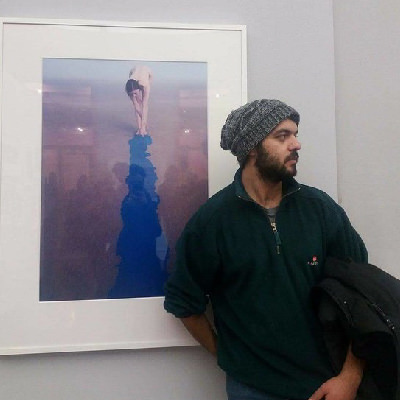
1992年5月28日、ミティリーニ(レスボス島)生まれ。テッサリア大学で建築を学ぶ。建築デザインでは、ギリシャ国内外の建築物の設計に携わる。 第一回テッサロニキ建築ビエンナーレにヴォロスが参加する際の技術サポート、および展示物の作成のために関わる (http: // www.arch.uth.gr/incubator/)。ヴォロスで開催された未来の州についての展覧会「ImagineCity ヴォロス2012」に参加(http: // www.imaginethecity.gr/Fantasoy-tin-poli-Bolos-2012)。ヴェネチア・ビエンナーレ国際建築展でのマリア・パパディミトリウのプロジェクト「Agrimika (why look at animals?)」を手がける。 趣味:グラフィックデザイン、アニメーション、ビデオ、ミュージック、DJとしての活動、エンターテイメントに関するトピックを見つけること。
Born on 28/05/1992 in Mytilene (Lesvos). Studied architecture at the University of Thessaly. As for the architectural design, he has been involved in the creation of buildings in Greece and abroad. He participated in the 1st Biennale architecture of Thessaloniki, as technical support for the participation of Volos and also the creation of the exhibit (http: // www.arch.uth.gr/incubator/). Participation in the exhibition, ImagineCity Volos 2012 (http: // www.imaginethecity.gr/Fantasoy-tin-poli-Bolos-2012), on the composition of a future state in Volos. Holding in the architecture biennale of Venice in the project of Maria Papadimitriou Agrimika (why look at animals?). Hobbies: graphic design, animation, video, music, working as a DJ, and finding topics for entertainment.
