

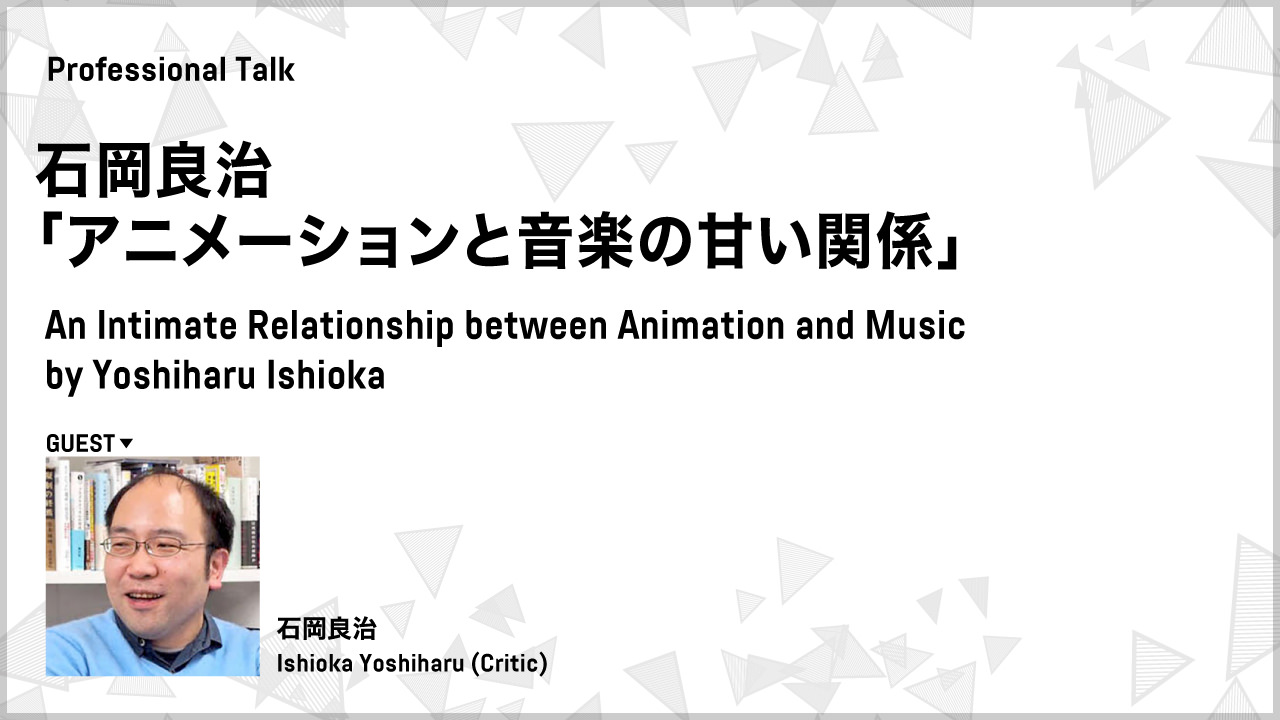
アニメーションは実写映像と比べて構成要素の大半を意図的に制御することが容易である、としばしば指摘される。たしかにCGの使用が全面化する以前の映像的要素については、この指摘が当てはまることは多かった。けれどもトーキー誕生以降、音響的要素との関連では、とりわけ音と映像という互いに齟齬する要素の制御にかんして、アニメーションと実写映像はかなり多くの課題を共有してきたように思われる。多種多様な「ミュージックビデオ」の実践は、アニメーションを音響との関係でトータルに考察していく際に極めて重要な手がかりになるのではないか。
It is often observed that visual elements are manipulated more easily in animation than in live action, which was in use before the arrival of the era of CGI images. However, after the birth of the talkies, the fact that both animation and live action face the same problems in terms of controlling the relationship between music and images is overlooked. To discuss this further, it is useful to explore the various attempts made to overcome this problem in music videos.
GUEST PROFILE
-

-
石岡良治 ( ISHIOKA Yoshiharu )
評論家・表象文化論[芸術理論・視覚文化]・ポピュラー文化研究
1972年、東京都生まれ。批評家、表象文化論。青山学院大学ほかで非常勤講師。著作に、『視覚文化「超」講義』(フィルムアート社、2014年)、『「超」批評 視覚文化×マンガ』(青土社、2015年)。論考に「岩井俊二作品における印象の重ね書き」(『ユリイカ』2012年9月号)、「細田守のアニメ作品における「機能する齟齬」―オープンシステムとしての「細田守作品」」(『ユリイカ』2015年9月臨時増刊号)など。
Critic
Born in 1972 in Tokyo, Ishioka is a critic and scholar on art theory and visual culture. He has published two books on popular culture till date: Shikaku Bunka “Cho” Kogi (“Awesome”-lecture on Visual Culture) and “Cho” Hihyo Shikaku Bunka x Manga (“Super”-critic: Visual Culture x Manga).
